- Vision Leadership for Life Newsletter
- Posts
- Black Men: Here's Why Metrics Don't Tell the Whole Story
Black Men: Here's Why Metrics Don't Tell the Whole Story
Vision Leadership for Life Newsletter

Dominic George
December 20, 2025

SPONSORED BY VISION LEADERSHIP FOR LIFE
Navigating Your Leadership Journey: Tailored Tips for Black Men in Mid-Level Roles
By Dominic George · December 20th 2025
Happy Saturday! Word Count: 2050…15.47 minutes. Copy edited by Dominic George
Welcome to this week’s edition of the Vision Leadership for Life newsletter, designed with the specific challenges faced by Black men in mid-level leadership positions in mind. We understand the unique journey you’re on, and our goal is to provide practical insights to help you thrive in your professional evolution. So, lets dive into today’s topic and Elevate Your Leadership.
Black Men: Here’s Why Metrics Don’t Tell the Whole Story

In leadership spaces today, metrics have become the language of legitimacy. Dashboards decide worth. Spreadsheets determine credibility. Performance reviews are reduced to percentages, charts, and rankings that claim to tell a complete story about impact, effectiveness, and readiness for the next level. For many organizations, if it cannot be measured, it does not matter. If it cannot be quantified, it is invisible.
And yet, if you are a Black man navigating leadership from mid level to senior leadership, you already know something that data alone will never fully capture. Metrics rarely tell the whole truth. They tell a version of the story, often stripped of context, culture, resistance, and humanity. They tell what happened, but almost never explain why it happened, what it cost, or what it required for you to make it happen.
At Vision Leadership for LIFE, we do not reject metrics. We challenge the belief that they are neutral, complete, or sufficient on their own. Metrics can inform leadership decisions, but they cannot define leadership capacity. And for Black men, over reliance on metrics can quietly become another system that rewards compliance over courage and output over alignment.
Metrics Were Not Designed With You In Mind
Let us be honest about something that rarely gets named out loud. Metrics were not designed with you in mind. They were designed to standardize performance in environments that often ignore unequal access to resources, political landmines, and unspoken cultural expectations. When your leadership is evaluated primarily through numbers, the invisible labor you carry never shows up on the scorecard.
You can hit every target and still be questioned.
You can exceed expectations and still be overlooked.
You can drive results and still be labeled as not ready.
This is not because the work was not real. It is because metrics flatten leadership into something easier to judge, but harder to understand.

What Metrics Cannot Measure
Metrics capture outcomes, not obstacles. They show results, not resistance. They measure efficiency, not emotional intelligence, relational trust, or cultural navigation. They do not measure the rooms you had to read carefully, the battles you chose not to fight, or the moments you absorbed pressure so your team could breathe.
Many Black men in leadership are carrying what I call hidden leadership weight. This includes mentoring junior staff who were never officially assigned to you. It includes translating organizational language so your team does not feel alienated. It includes deescalating tension that others created, but you were expected to manage. None of this shows up in a quarterly report, yet it is often the reason teams remain intact and organizations remain functional.
Performance Versus Impact: Metrics also fail to capture how leadership is experienced by others. A leader can meet every numerical goal and still leave a trail of disengagement behind them. Another leader may miss a target by a small margin yet build trust, loyalty, and resilience that pays dividends for years. Metrics will reward the first and question the second, even when the long term impact tells a very different story.
This is where many Black men begin to internalize a dangerous belief. If the numbers look good, I should feel successful. If the numbers look bad, I must be failing. Over time, this belief erodes intuition and replaces self trust with performance anxiety. Leadership becomes about chasing validation instead of building vision.
ADVICE TIP FOR BLACK MEN: Actively define your leadership impact beyond the numbers. Too many Black men allow performance metrics to speak for them without context, assuming results alone will be enough to earn recognition and advancement. This leaves critical leadership contributions unseen and undervalued.
Solution Shift:
Begin documenting your leadership narrative weekly by capturing decisions made, influence exercised, relationships strengthened, and problems prevented. Treat this as essential leadership evidence, not optional reflection.
Additional Tip for Black Men: Stop using metrics as validation and start using them as information. When metrics become personal, leadership turns into a constant performance test rather than a strategic practice. This mindset erodes confidence and disconnects you from your instincts as a leader.
Solution Shift: Reframe metrics as data points, not judgments. Ask what the numbers are teaching you rather than what they say about your worth. Make one decision this week based on alignment and long term impact instead of immediate measurement.
When Success Feels Empty for Black Men

I see this often with clients who come to Vision Leadership for LIFE exhausted, accomplished, and disconnected. On paper, they look successful. In reality, they feel invisible, boxed in, or constantly performing a version of leadership that does not feel like them. Metrics have become the mask they wear to survive systems that never asked who they are or how they want to lead.
Metrics also struggle to measure growth. Growth is rarely linear. It includes experimentation, mistakes, recalibration, and learning that temporarily slows visible output. Yet many systems punish this phase, especially when the leader does not fit the dominant mold. Black men are often given less room to learn publicly. Mistakes are remembered longer. Grace is extended shorter.
When metrics dominate the narrative, growth becomes risky. Leaders stop stretching because the numbers might dip. Innovation gets replaced with safety. Authentic leadership gets traded for predictability. Over time, organizations lose bold thinkers, and leaders lose themselves.
This is why The Authentic Edge: Leading Without Losing Yourself exists. It is not anti performance. It is pro alignment. It is about understanding that your greatest leadership strength is not just what you produce, but how you produce it and who you remain in the process. Metrics can tell part of the story, but alignment tells you whether the story is sustainable.
Ask Better Leadership Questions
Alignment asks different questions.
Are you leading in a way that reflects your values?
Are you building power without abandoning your identity?
Are you creating impact that extends beyond the spreadsheet?
Metrics will never ask these questions. You must.
Influence is NOT a KPI: Another truth metrics rarely capture is influence. Influence is subtle. It shows up in who seeks your counsel when the room is quiet. It shows up in who trusts you with the truth before it becomes a crisis. It shows up in who feels safer taking risks because you are present. Influence cannot be reduced to a key performance indicator, yet it is often what determines who actually leads and who simply holds a title.
For Black men, influence is often earned without recognition. You become the stabilizer, the translator, the culture carrier. You are asked to fix things without authority and produce results without power. When success happens, the credit disperses. When challenges arise, accountability concentrates. Metrics will not explain this imbalance, but you feel it every day.

Owning the Narrative of Your Leadership
This is why leadership narratives must expand. You cannot afford to let numbers speak for you without context. You must learn to articulate your impact beyond metrics. This means naming the invisible work. It means documenting relational wins, cultural shifts, and long term outcomes. It means telling the story behind the numbers so your leadership is understood, not assumed.
This is not self promotion. It is strategic self preservation.
At Vision Leadership for LIFE, we coach Black men to build what I call a portfolio of impact. Metrics are included, but they are not the headline. The headline is how you think, how you lead, how you build trust, and how you navigate complexity without losing yourself. This portfolio allows you to walk into rooms with clarity instead of defensiveness, confidence instead of over explanation.
Metrics also fail to measure courage. Courage looks like naming misalignment when silence would be safer. It looks like advocating for your team when it might cost you political capital. It looks like choosing integrity over optics. These moments rarely improve short term numbers, but they shape long term leadership legacy.
Many Black men are taught, implicitly, to avoid these moments. Do not rock the boat. Just deliver the results. Let the numbers protect you. But numbers do not protect leaders who are misaligned. They only delay the reckoning.
ADVICE TIP FOR BLACK MEN: Make invisible leadership labor visible without apology. Mentorship, emotional regulation, cultural translation, and team stabilization are often expected from Black men, but rarely recognized. When this work goes unnamed, it becomes assumed rather than valued.
Solution Shift:
Practice naming invisible work in real time. In meetings, updates, or reviews, explicitly connect team stability and progress to leadership actions you took. Visibility is not arrogance, it is clarity.
Additional Tip for Black Men: Lead with courage even when it cannot be measured. Many Black men are taught that staying safe and producing results will protect them, yet alignment and integrity are what sustain leadership over time. Metrics rarely reward courage in the short term, but they reveal its absence later.
Solution Shift: Identify one moment this month where you will choose truth over comfort and alignment over approval. Say the thing that needs to be said or advocate where silence has been easier. Courage compounds faster than numbers ever will.
Closing Thoughts:

In summary, eventually, every leader faces a moment when the metrics look good but the cost feels too high. Burnout. Resentment. Disconnection. That is the moment this conversation matters most. Metrics did not fail you. They simply were never meant to carry the full weight of your leadership journey.
The invitation here is not to abandon metrics, but to reclaim authorship of your story. Use data as a tool, not a verdict. Let numbers inform your strategy, not define your worth. Build language for the parts of leadership that do not fit neatly into charts.
When you do this, something powerful happens. You stop chasing validation and start building vision. You stop shrinking yourself to fit the metric and start expanding the metric to reflect real leadership. You stop leading for approval and start leading with intention.
That is what it means to live intentional forever. That is Vision Leadership for LIFE.
Your leadership is more than a number. It always has been.
That’s the new path forward.
Subscribe to the Vision Leadership for LIFE newsletter now for early access, if you want your insider tips, exclusive insights, and access to the strategies behind your leadership guidebook.
Get access to your leadership guide book by clicking this link: https://a.co/d/5M2eVzx
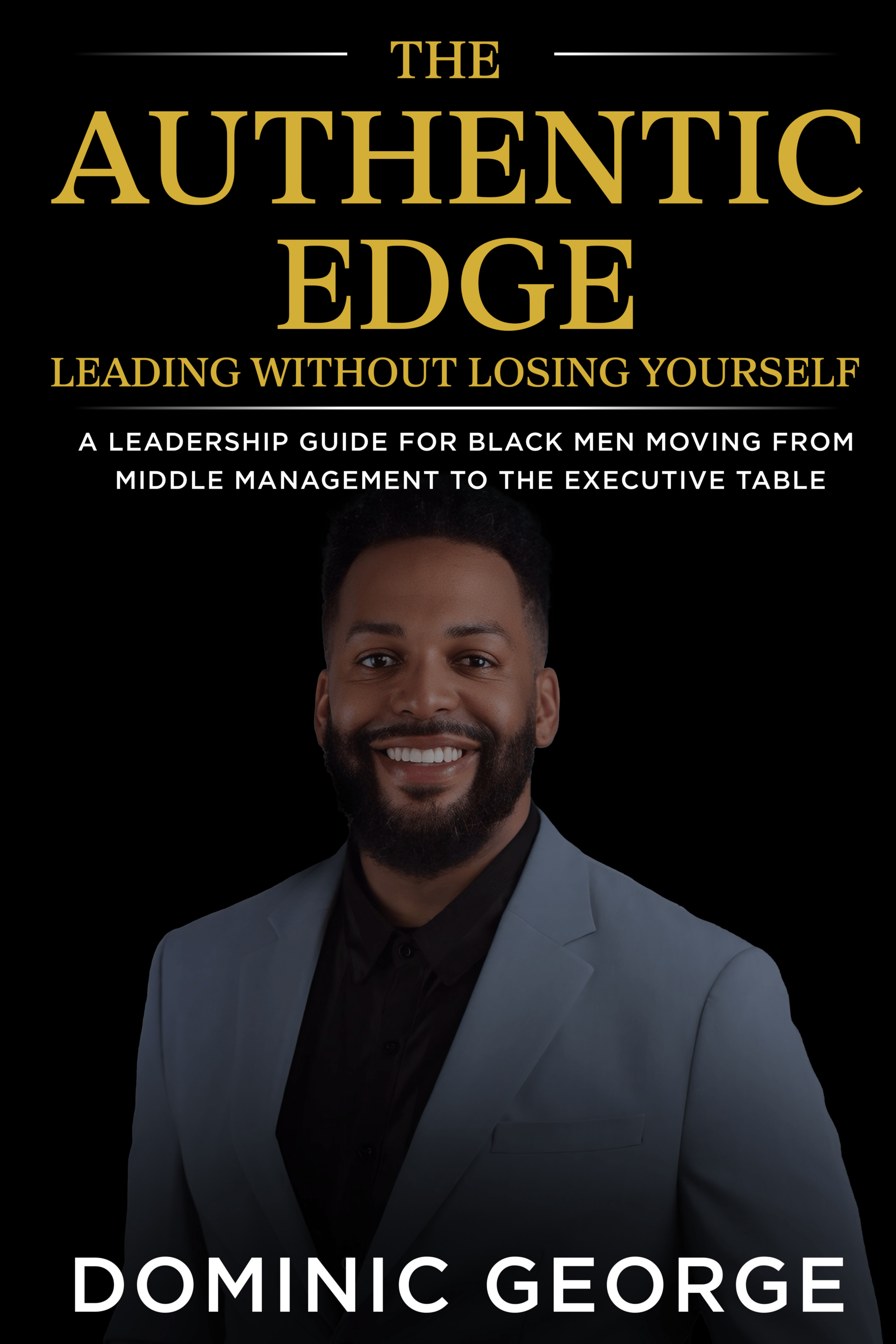
Fellas, your journey is both unique and powerful. If you’re ready to start leading from your authentic edge, then your on the roadmap for greatness. When you’re leading from within, you are not only advancing your career but also paving the way for future leaders.
Feel free to reach out for personalized coaching or share your success stories.
Your success is our shared triumph.
Real Talk: If you’re ready to:
Reclaim your voice in high-stakes spaces.
Lead with strategy, not survival.
Build a legacy that doesn’t require you to perform to belong.
You don’t have to lose yourself to lead. You just have to reclaim who you are, and lead from there.
Have a POWERFUL Day!
Dominic George
Founder, Vision Leadership for LIFE - LLC

Intellectual Property Notice:
© 2025 Vision Leadership for LIFE - LLC. All rights reserved.
The content, concepts, and original expressions in this newsletter are the exclusive intellectual property of Dominic George and Vision Leadership for LIFE, LLC. No part of this publication may be reproduced, distributed, or transmitted in any form without prior written permission. This newsletter is intended for personal development and leadership growth. Respect the work. Honor the source.
The Authentic Edge™ framework and related materials are proprietary to Vision Leadership for LIFE - LLC.