- Vision Leadership for Life Newsletter
- Posts
- The Language of Leadership for Black Men: How Your Say It Matters
The Language of Leadership for Black Men: How Your Say It Matters
Vision Leadership for Life Newsletter

Dominic George
November 22, 2025

SPONSORED BY VISION LEADERSHIP FOR LIFE
Navigating Your Leadership Journey: Tailored Tips for Black Men in Mid-Level Roles
By Dominic George · November 22nd 2025
Happy Saturday! Word Count: 2039…15:42 minutes. Copy edited by Dominic George
Welcome to this week’s edition of the Vision Leadership for Life newsletter, designed with the specific challenges faced by Black men in mid-level leadership positions in mind. We understand the unique journey you’re on, and our goal is to provide practical insights to help you thrive in your professional evolution. So, lets dive into today’s topic and Elevate Your Leadership.
Visit us at www.visionleadershipforlife.com
The Language of Leadership for Black Men: How You Say It Matters

Black men in leadership often learn early that every word lands with weight. Every statement is measured. Every idea is evaluated. Every misstep is magnified. We carry the awareness that our language is judged before our expertise is respected. Many of us were taught to survive by editing ourselves. We learned to hold back the fullness of our voice. We softened our tone so others could feel comfortable. We reduced our truth so others could feel secure. Survival trained us to speak in ways that protected us, not in ways that elevated us.
But survival language does not create senior leadership impact.
In my coaching work with Vision Leadership for LIFE and throughout The Authentic Edge: Leading Without Losing Yourself, I guide Black men through the shift from the language that kept them safe to the language that makes them powerful. Because leadership is not only about strategy. It is also about how you speak your strategy. Leadership is not only about preparation. It is also about how you present your vision. Leadership is not only about competence. It is also about the confidence your communication conveys.
Your language is your leadership instrument. It is the tool you use to influence rooms, shift culture, and anchor your identity in spaces that are not always built for you. How you say something creates clarity or confusion. It builds trust or tension. It opens doors or quietly closes them. When you master the language of leadership, you stop reacting to the culture around you and start shaping it.
This newsletter is about reclaiming your voice as a strategic asset. Your power is not found in how loud you speak. Your power is found in how aligned your words are with your values, your purpose, and your identity. It is time to elevate the language you lead with.
Let us get into it.
Leadership Requires Intentional Language
When you step into positions of higher influence, you are evaluated not only on what you do but on how you communicate what you do. Your team, your peers, your senior leaders, your stakeholders, and your sponsors all listen for something specific when you speak. They are listening for clarity, conviction, and consistency.
Clarity tells people you know where you are going. Conviction tells people you believe in the direction. Consistency tells people they can trust you to lead them there.
Many Black men in leadership communicate with clarity behind closed doors but with caution in public. They speak boldly among friends but strategically shrink in front of executives. They can articulate their vision in private but soften it in spaces where power is present. This is not because they lack skill. It is because they have been conditioned to believe that their tone must match the room rather than match their values.
Leadership demands the opposite. True leadership language is not shape shifting. It is grounding. It is rooted in who you are, not in what others expect.
How you communicate reflects how you see yourself. If you speak from a place of permission, you will always sound like you are waiting for validation. If you speak from a place of identity, you will sound like a leader whose presence sets the tone.

The Words You Choose Reflect The Leader You Are Becoming
Every leader reaches a point where they realize that their communication must evolve. This is usually the moment when your role shifts from execution to direction. You are no longer only responsible for your own work. You are communicating a vision that others must follow. You are influencing strategy, not simply implementing it. You are shaping culture, not just navigating it.
And that transition requires a new level of language.
Your language must shift from reactions to responses. From defending your work to articulating your impact. From giving information to providing insight. From summarizing tasks to elevating strategy. From reporting problems to naming solutions. This shift is not about sounding more professional. It is about sounding more powerful. It is about speaking from your identity rather than from your insecurity.
The language of leadership is rooted in intention. It is the ability to choose words that build trust while standing firm in your clarity. It is the ability to speak truth without apologizing for the truth you carry. It is the ability to influence a room without raising your voice.
Leadership Language Builds Or Breaks Credibility
I have coached many Black men who enter meetings with brilliant strategies but struggle to communicate them in ways that inspire confidence. They apologize when they should affirm. They over explain when they should simplify. They soften the message when they should strengthen it. The result is not a reflection of their capability. It is a reflection of how they were taught to survive.
When you are constantly measured, you learn to minimize yourself. But leadership is about expansion. It is about stepping into the fullness of your voice. This does not mean you become aggressive. It means you become anchored. Your language must carry certainty. You do not need to speak loudly when your clarity speaks for you.
Credibility is not built on volume. It is built on alignment. When your words match your values, when your statements match your standards, and when your tone matches your purpose, people trust your leadership.
The Power of Shifting from Emotional Reaction to Emotional Intelligence
We often speak from the place of our emotions when we feel unseen or undervalued. But leadership requires a new discipline. Emotional reaction communicates frustration. Emotional intelligence communicates direction.
When you operate with emotional intelligence, you learn to separate the feeling from the message. You honor the emotion without allowing it to shape your tone. You center the outcome, not the irritation. This is how leaders maintain influence. Not by suppressing emotion, but by leading through it.
Your language should demonstrate emotional clarity. You can name a problem without projecting anger. You can express urgency without sending panic. You can communicate disappointment without damaging relationships. You can deliver truth without diminishing dignity.
This is the level of communication that separates managers from senior leaders.
ADVICE TIP FOR BLACK MEN: Speak from clarity, not caution. When you enter rooms with senior leaders or stakeholders, focus on naming the direction you believe in with confidence. Stop waiting to see how others respond before you own your perspective.
Solution Shift:
Replace permission based language with identity based language. Start your statements with clarity instead of apology. Say what you mean without shrinking the magnitude of your insight.
Additional Tip for Black Men: Communicate Strategy, not survival. Move away from over explaining your value or justifying your presence. Speak in a way that highlights insight, vision, and strategic thinking instead of listing tasks or defending your work.
Solution Shift: Shift from reporting what you did to articulating why it matters. Use language that elevates impact and demonstrates leadership thinking.
Black Men, Your Leadership Language Should Signal Authority Without Losing Authenticity

Finding Your Communication Style
A major challenge for many Black men in leadership is finding a communication style that feels authentic while still being respected in professional spaces. Some feel pressure to mimic the communication style of others in power. Some feel forced to adopt language patterns that do not reflect who they are. But real leadership does not require imitation. It requires presence.
Your language should reflect your identity, your culture, and your experience. You do not need to disconnect from who you are to rise into who you are becoming. You can speak with cultural rhythm and still demonstrate executive clarity. You can express your values without minimizing them. You can show your personality without sacrificing professionalism.
Authentic language is powerful because it allows people to trust that the leader they hear is the leader they will follow.
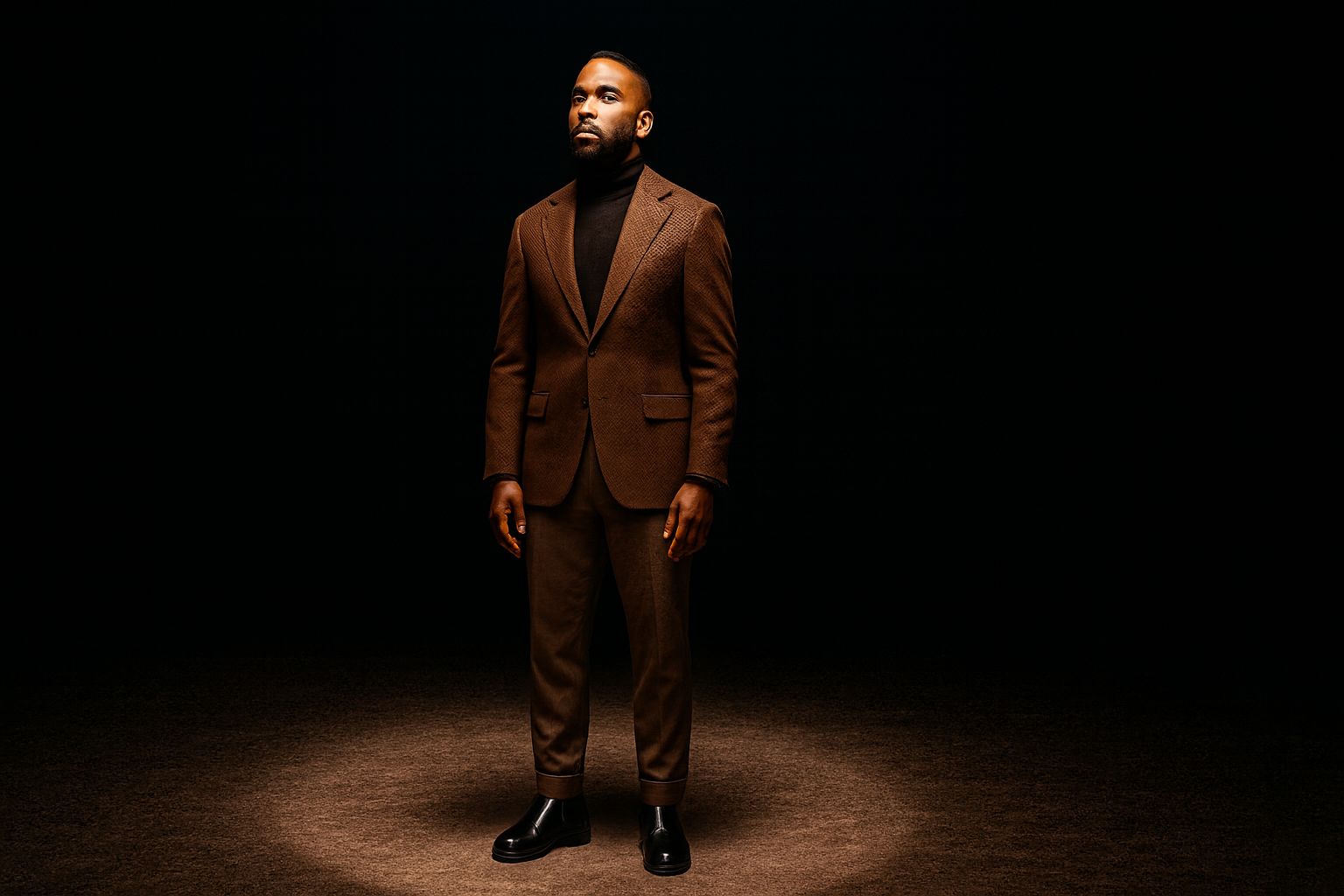
A Leadership Voice is Trained, Not Born
No one becomes an influential leader by accident. You learn your voice. You refine it. You sharpen it. You practice it. You evolve it.
Here is what I teach Black men inside my coaching practice.
You do not rise into senior leadership with survival language. You rise with strategic language. Every room you walk into is an opportunity to practice speaking with intention. Every meeting is a moment to practice clarity. Every presentation is a chance to practice leadership presence.
You build your voice by using it. You strengthen your voice by trusting it. You refine your voice by aligning it with your purpose. The language of leadership is not a performance. It is a discipline.
ADVICE TIP FOR BLACK MEN: Anchor your tone in emotional intelligence. When conversations feel tense or triggering, pause and ground yourself before speaking. Let your message be shaped by intention, not irritation.
Solution Shift:
Replace emotional reaction with emotional clarity. Choose words that move the conversation forward rather than deepen frustration. Lead the room with calm authority.
Additional Tip for Black Men: Honor your authentic voice in every leadership space. Your communication should reflect your values, culture, and lived experience. You do not need to imitate anyone else to earn influence.
Solution Shift: Stop filtering out the parts of your voice that make you powerful. Speak in ways that feel natural to you while keeping your message aligned with your purpose and standards.
Closing Thoughts:

In summary, language creates culture and culture creates legacy. What you say shapes the environment around you. If you communicate uncertainty, people will follow with caution. If you communicate confidence, people will follow with conviction. If you communicate vision, people will follow with energy.
Your leadership language becomes the culture you build. The culture you build becomes the impact you leave. And the impact you leave becomes the legacy you create.
This is why your voice matters. This is why your words matter. This is why your tone matters. Leadership begins with language. How you say it matters.
Your voice is an instrument of influence. It is time to use it with intention.
That’s the new path forward.
Subscribe to the Vision Leadership for LIFE newsletter now for early access, if you want your insider tips, exclusive insights, and access to the strategies behind your leadership guidebook.
Get access to your leadership guide book by clicking this link: https://a.co/d/5M2eVzx
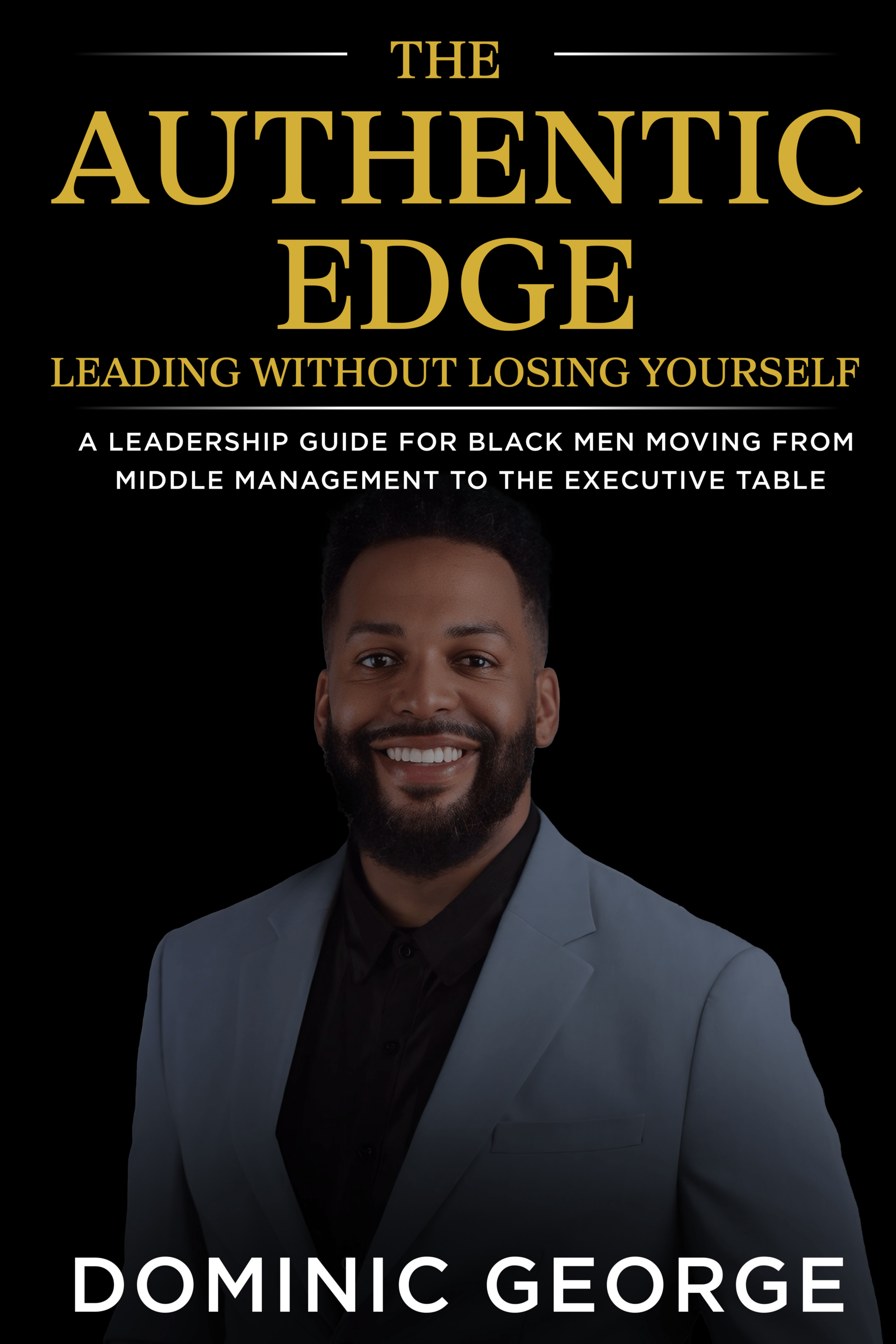
Fellas, your journey is both unique and powerful. If you’re ready to start leading from your authentic edge, then your on the roadmap for greatness. When you’re leading from within, you are not only advancing your career but also paving the way for future leaders.
Feel free to reach out for personalized coaching or share your success stories.
Your success is our shared triumph.
Real Talk: If you’re ready to:
Reclaim your voice in high-stakes spaces.
Lead with strategy, not survival.
Build a legacy that doesn’t require you to perform to belong.
You don’t have to lose yourself to lead. You just have to reclaim who you are, and lead from there.
Have a POWERFUL Day!
Dominic George
Founder, Vision Leadership for LIFE - LLC

Intellectual Property Notice:
© 2025 Vision Leadership for LIFE - LLC. All rights reserved.
The content, concepts, and original expressions in this newsletter are the exclusive intellectual property of Dominic George and Vision Leadership for LIFE, LLC. No part of this publication may be reproduced, distributed, or transmitted in any form without prior written permission. This newsletter is intended for personal development and leadership growth. Respect the work. Honor the source.
The Authentic Edge™ framework and related materials are proprietary to Vision Leadership for LIFE - LLC.